


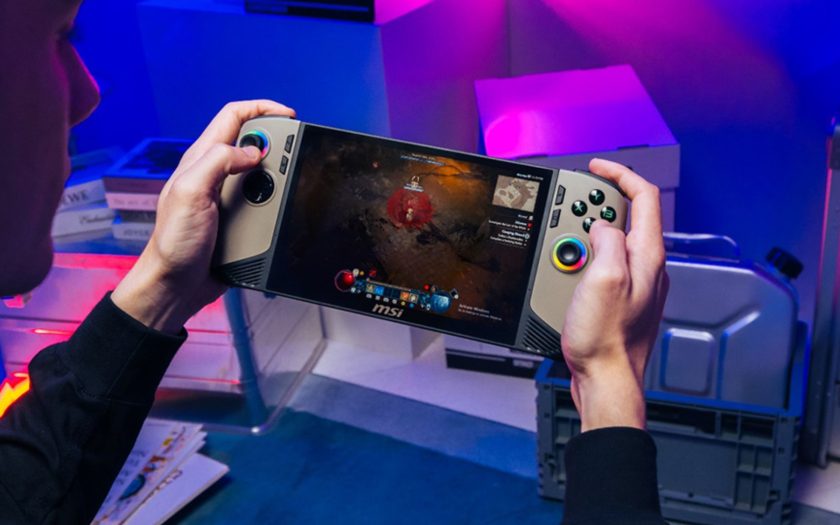
A new generation of AI-powered handhelds are here. On Tuesday, MSI announced two additions to the Claw lineup: the MSI Claw 8 AI+ and the MSI Claw 7 AI+ refreshed models.
Each handheld will be equipped with Intel’s next-gen Core Ultra 7 (Series 2) processor and a 8-inch or 7-inch display, respectively, “enhanced by AI-driven precision.” MSI also notes that both handhelds will benefit from “larger batteries,” a better cooling system, and “optimized power consumption for smoother performance” — all incredibly positive features for frequent handheld gamers.
Considering how poorly received the MSI Claw was earlier this year (it earned only 2.5 out of 5 stars in our review), I can’t wait to see how many improvements have been made, if any, to these new models. MSI says these new handhelds “set a new standard for portable gaming,” so stakes are certainly high. Let’s see how they compare to two of the most popular PC handhelds available now.
MSI’s AI-powered handhelds compared to Valve’s SteamDeck and Asus’ ROG Ally X
(Image credit: MSI)
According to The Verge, MSI’s two new gaming handhelds will launch on December 25, but you can currently pre-order them if you want.
At full price, the MSI Claw 8 AI+ retails for $899 with 1TB of SSD storage and the MSI Claw 7 AI+ retails for $799 with 512GB of SSD storage. Compared to the Steam Deck and the Ally ROG X, these two new handhelds from MSI are quite pricey.
To get 1TB of storage and a better, brighter display on a Steam Deck, it would only cost you $649. To get 1TB of storage and similar specs (albeit an AMD-based CPU/GPU combo) with the Ally ROG X, you’d only spend $799 compared to the $899 you’d spend on an MSI Claw 8 AI+.
Swipe to scroll horizontallyHeader Cell – Column 0 MSI Claw 8 AI+ A2VMMSI Claw 7 AI+ A2VMValve Steam Deck (1TB/OLED)Asus ROG Ally XPrice$899$799$649$799Display8-inch FHD+ (1920 x 1200), 120Hz, 500 nits7-inch FHD+ (1920 x 1200), 120Hz, 500 nits7.4-inch 1280 x 800-pixel HDR OLED, 90Hz, 600 nits7-inch FHD (1920 x 1080), 120Hz, 500 nitsProcessorIntel Core Ultra 7 258VIntel Core Ultra 7 258VAMD Zen 2AMD Ryzen Z1 ExtremeGraphicsIntel Arc 140VIntel Arc 140VAMD 8 RDNA 2 CUAMD RDNA 3, 12 CUsMemory32GB LPDDR532GB LPDDR516GB LPDDR512GB LPDDR5Storage1TB SSD512GB SSD1TB SSD1TBOSWindows 11 HomeWindows 11 HomeSteamOS 3Windows 11 HomeConnectivityWi-Fi 7, Bluetooth 5.4Wi-Fi 6E Bluetooth 5.3Wi-Fi 6E, Bluetooth 5.3Wi-Fi 6E, Bluetooth 5.2I/O ports2x Thunderbolt 4, 1x microSD card reader, 1x audio jack2x Thunderbolt 4, 1x microSD card reader, 1x audio jack1x USB-C charging, 1x microSD card reader, 1x audio jack1x Thunderbolt 4, 1x USB-C charging, 1x microSD card reader, 1x audio jackBattery80Whr54.5Whr50Whr80WhrDimensions299 x 126 x 24 mm290 x 117 x 21.2 mm298 x 117 x 49 mm280 x 111 x 25mmWeight795 grams675 grams~640 grams678 gramsColorway(s)SandstormBlackBlackBlack
It does look like MSI has paid attention to the look and feel of its devices, noting a new “ergonomic design” that’s “tailored to fit the natural contours of the hand.”
(Image credit: MSI)
But even with a better fit, redesigned sticks and buttons, and improved features, MSI will have to knock it out of the park to come back from its major failure earlier this year — especially when it’s more expensive than the two leading PC gaming handheld options.
Both consoles release on December 25, but stay tuned to Laptop Mag for any additional firsthand thoughts on how MSI’s next-gen handhelds compare.


